So, you have a list of promising résumés. What’s the next step? It's not jumping straight into a formal interview. That’s where the phone screen comes in.
A phone screening interview is a short, initial conversation—usually lasting 15 to 30 minutes—that helps recruiters quickly determine if a candidate has the basic qualifications for a job. Think of it as the first checkpoint in the hiring process. It’s about making sure essentials like skills, experience, and salary expectations line up before anyone commits to a longer conversation.
What Is the Goal of a Phone Screening Interview
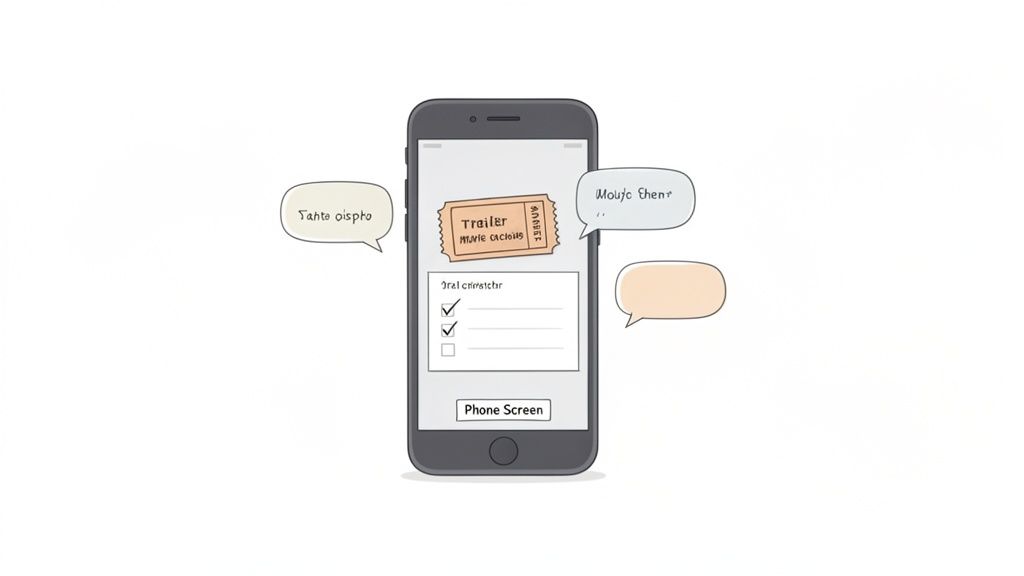
Imagine a phone screen as the trailer for a movie. It’s not the whole film. It's a quick preview to decide if it's worth the time for the main feature—the formal interview.
This initial call is a fundamental step for any modern recruiting team. For companies, it’s an efficient way to handle a large number of applicants and ensure only the most viable candidates move forward. It’s less about a deep dive into their background and more about a simple check on the basics.
A phone screen is the gatekeeper of the hiring process. Its primary job is to protect everyone's time—the candidate's, the hiring manager's, and the recruiter's—by filtering out clear mismatches early on.
This pre-qualification step is so important that many companies are willing to accept a slightly longer hiring process to include it. In fact, adding phone screens can extend the hiring timeline by an average of eight days. But businesses stick with it because the improvement in candidate quality is worth the extra time. You can learn more about the role of phone screening in modern recruitment practices.
Key Objectives for Recruiters
For recruiters, the goals are straightforward. They need to get clear answers to a few core questions before investing more time and energy into a candidate.
- Verify Core Qualifications: Does this person have the must-have skills and experience from the job description?
- Assess Genuine Interest: Are they interested in this company and this role, or are they sending their résumé out widely?
- Check Logistical Fit: Do their salary expectations, start date, and location needs match what the company can offer?
Ultimately, this first touchpoint is about building a strong shortlist. It makes sure the people who move on are not just qualified on paper but are also interested and a good logistical match. This sets the hiring manager up for much more meaningful and productive conversations.
The Recruiter’s Playbook for an Effective Phone Screen
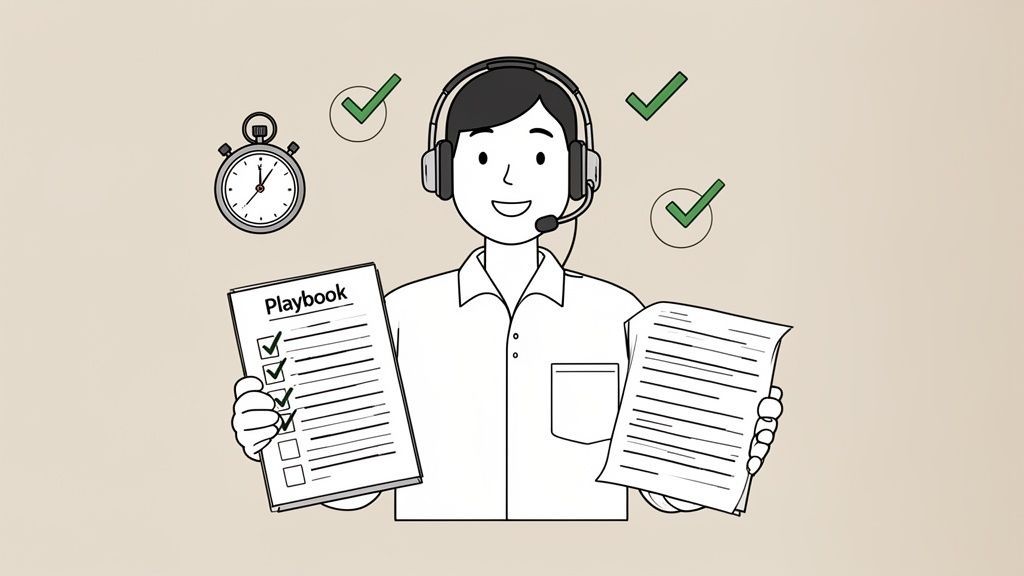
A good phone screen shouldn't feel like an interrogation. It should be a focused, professional conversation. You’re there to gather the information you need to make a smart decision, but you're also giving the candidate their first real impression of your company culture. A structured approach is key.
Think of yourself as a detective looking for specific clues. Before you dial, you need a clear picture of what you’re searching for. That means sitting down with the hiring manager and defining the absolute non-negotiable skills and qualifications. This preparation is the foundation of an efficient and fair screening process.
Setting the Stage for Success
Your first task, before any calls happen, is to build a consistent framework. A structured approach means every candidate gets a similar experience, which is important for compliance and the quality of your hire. It also keeps you on track and shows you respect everyone's time.
Here's a quick pre-call checklist to run through:
- Define Must-Haves: Pinpoint 3-5 essential qualifications. If a candidate doesn't have these, they're likely not the right fit, and it's better to know that early.
- Create Core Questions: Write a standard set of questions you’ll ask every person. This helps you get clean, comparable information later.
- Review the Résumé: Take two minutes. A quick scan of their background helps you ask sharper, more relevant questions and shows you’ve done your homework.
This upfront effort pays off. It turns what could be a rambling chat into a targeted discovery session.
A well-structured phone screen is an effective tool for separating qualified candidates from wishful thinkers. By standardizing your initial questions, you gather consistent, comparable data that makes your shortlist stronger and more defensible.
For any recruiter juggling back-to-back calls, taking good notes without breaking the flow of conversation is a challenge. You might want to look into using dictation software to capture important details accurately. It lets you stay present in the conversation while ensuring you can recall specifics when it's time to compare candidates.
A Simple and Adaptable Script
Having a script doesn't mean you have to sound robotic. Think of it as a roadmap for the conversation, making sure you cover all your bases in the 15-20 minutes you have.
Here’s a simple structure you can easily adapt.
1. The Opening (2 Minutes) Start by introducing yourself and the company, and confirm they’re in a good spot to talk. Briefly outline the agenda for the call: you'll ask a few questions about their background, they'll get a chance to ask their own questions, and you'll explain what comes next. This sets a professional tone and manages expectations.
2. Core Questions (10-15 Minutes) This is the main part of the interview. Stick to your pre-defined questions about their experience, what motivated them to apply, and any logistical deal-breakers like salary expectations. Pay attention not just to what they say, but how they say it—you can often pick up on signals of interest and cultural alignment.
3. The Closing (3 Minutes) Always thank the candidate for their time. Then, clearly explain the next steps in the hiring process and give them a realistic timeline for when they can expect to hear back. A transparent closing can reduce candidate anxiety and reflects well on your company, regardless of the outcome.
Following this playbook ensures your phone screen is more than just a filter—it becomes a valuable, data-gathering touchpoint. If you're looking to add another layer to your evaluation, you can explore different candidate assessment tools to complement your screening.
Cohesyve
See what candidates can do before you interview them
Cohesyve turns a job description into a role-specific assessment with a scoring rubric. Each candidate gets a different version, so questions cannot be shared. Ten candidates free, no card.
Key Phone Screening Questions and What They Reveal
In a phone screen, every question counts. You’re not trying to trip someone up; you’re on a mission to gather the right signals quickly to determine if it makes sense for everyone to invest more time. The art lies in asking simple questions that reveal information about a candidate's skills, motivation, and potential fit.
Think of your questions as a compass pointing you to the core of who a candidate is professionally. A structured, thoughtful approach is more effective than an unstructured one because it allows you to compare candidates more fairly later on.
This isn’t just a good idea—it’s where the industry is heading. A recent study shows 72% of companies now rely on structured interviews for more consistent evaluations, and 48% are using data-driven assessments to support their decisions. That’s a significant increase from just 30% in 2023, and it tells a clear story: objective, fair hiring is becoming standard practice. You can dig deeper into these job interview trends to see how the landscape is changing.
Confirming Foundational Skills
First things first: can this person do the job? These questions are designed to get past the résumé summary and get to their hands-on experience.
"Can you walk me through your experience with [a specific tool or skill]?" This is more effective than asking, "Do you know X?" It prompts them to tell a story, providing context and detail. Their answer will quickly reveal whether they are a casual user or have deeper expertise.
"Tell me about a project you're particularly proud of and your role in it." This question can be very informative. It helps you see what they’re passionate about and what they consider to be meaningful work. You also get a glimpse into what "ownership" means to them and how they describe collaborating with a team.
Exploring Motivation and Drivers
A qualified candidate with low motivation can be a retention risk. You need to understand why they want this job, which is just as important as what they can do.
What prompted your job search? This is a key question. The answer can reveal anything from a desire for growth to a need to leave a difficult work environment. A candidate who is drawn to your company's mission is often a better long-term fit than one who is simply looking for any available role.
Here's what you should be listening for:
- A pull toward your company: Do they bring up your products, your culture, or specific challenges you’re known for tackling? That shows they’ve done their homework and are genuinely interested.
- A push from their current role: Are they running from something? Be mindful of vague answers like "seeking new challenges," as they can sometimes mask deeper issues.
Checking Logistical and Cultural Fit
Finally, you have to make sure the practicalities line up. Getting this wrong is one of the quickest ways to waste everyone's time later in the process.
"What are your salary expectations for this role?" Don't be shy about this. It's a straightforward, essential question to ensure you’re both in the same financial ballpark before moving forward.
"What kind of work environment helps you do your best work?" This question uncovers what they need to thrive—their preferred management style, desire for autonomy, and the kind of team dynamic they enjoy. Their answer is your first real clue as to how they’ll fit with your existing culture.
These questions build a solid foundation, but remember, a phone screen is based on what a candidate says they can do. The next step is often to get proof through objective, role-specific assessments that show what they can actually do.
How Candidates Can Master the Phone Screening Interview
As a candidate, it’s easy to dismiss the phone screen as a low-stakes formality. A quick chat before the real interviews begin, right? Not exactly. This is your first opportunity to make an impression, and you should treat it as a two-way street—a discovery session where you're also figuring out if this company is the right move for you.
Think of it from the recruiter’s perspective: their time is limited. They’re looking for someone who can quickly and clearly connect their experience to the company’s needs. Don't just list your past duties. Instead, tell a story that links your accomplishments directly to the challenges mentioned in the job description. This shows you’ve done your homework and are already thinking about how you can contribute.
Prepare for a Winning Conversation
A standout phone screen performance begins long before the phone rings. Focused preparation can improve your confidence and help you present yourself well.
- Craft Your Two-Minute Pitch: Prepare a concise, two-minute summary of your professional story. It should hit the highlights of your skills and biggest accomplishments, all framed in the context of the role you're targeting.
- Set Up a Distraction-Free Zone: Find a quiet spot where you won’t be interrupted. Background noise like dogs barking or café chatter can be unprofessional.
- Ensure a Clear Connection: Double-check your technology. A reliable phone line or a good headset is important. A dropped call or poor audio quality can disrupt the conversational momentum.
To perform well, you need to be more than just prepared—you need to be a good conversationalist. This involves mastering active listening and conversational flow, which helps build rapport with the recruiter.
Engage Thoughtfully During the Call
When you're on the line, your job is to be an active partner in the conversation, not just a passive interviewee waiting for the next question. The energy you bring and the questions you ask can make a difference.
Since the recruiter can't see you, your voice is doing all the work. One study found that your tone of voice can account for up to 84% of your message's impact over the phone. A simple trick is to stand up and smile while you talk. It may sound a little silly, but it can genuinely change your vocal quality and project a sense of confidence and energy.
Treat the phone screen like a strategic conversation, not a quiz. Your questions are just as important as your answers. They demonstrate your curiosity, intelligence, and genuine interest in the role and the company’s future.
Finally, always have a few thoughtful questions of your own ready to go. Go beyond the basics. Ask about the team's biggest challenges, what success looks like in the first six months, or the company's vision for the next year. Asking these kinds of insightful questions shows you’re already thinking like a valuable team member, not just a job seeker. It’s a detail that contributes positively to the candidate experience.
Moving from Conversation to Skill Verification
A successful phone screen tells you there’s a solid connection on the basics—they're interested, seem like a good cultural fit, and the logistics line up. But it doesn't prove they can actually do the job.
Relying solely on how well someone talks about their skills is like buying a car based on a brochure. It looks great on paper, but you don't know how it drives until you take it for a test run.
This is where your hiring process needs to shift from conversation to verification. It’s the moment where you differentiate candidates who can merely describe their skills from those who can demonstrate them. Misjudging this can lead to a costly hiring mistake.
A common approach is to add an objective layer right after a successful phone screen. By sending a relevant skill challenge, you can gather evidence of a candidate's abilities before anyone else on the team invests more time.
This diagram lays out the essential stages, showing how a structured process moves from initial prep to that all-important follow-up.
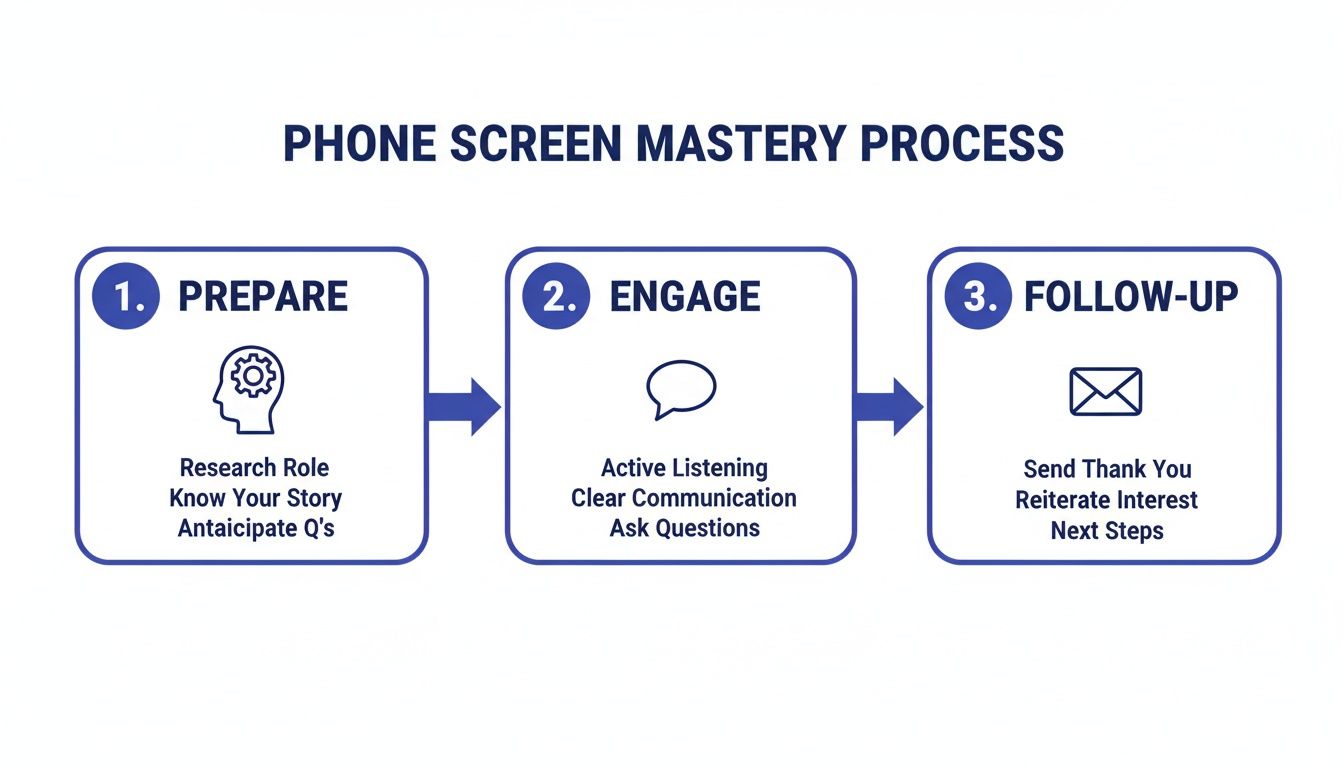
It’s a clear reminder that a solid screening process isn't just a chat; it's a journey that prepares the way for deeper skill validation.
From Saying to Doing
A practical, job-relevant assessment is an effective way to bridge the gap between what a candidate says and what they can do. This isn’t about a long exam. It’s about a focused challenge that mirrors the actual work they’d be doing.
Consider these examples:
- For a developer: A short, timed coding exercise that reflects a common problem they'd solve in this role.
- For a content marketer: A writing prompt asking them to outline a blog post on a relevant topic.
- For a consultant: A micro case study where they analyze a business problem and outline a potential solution.
This approach gives you a real window into how a candidate thinks, solves problems, and communicates their ideas in a realistic context. It's also a great way for candidates who might not be the most polished interviewers to let their work speak for itself. Plus, it gives you a fair, structured way to compare everyone on equal footing.
If you're looking for more ways to assess candidates remotely, our guide on one-way video interviewing offers some useful ideas.
A data-driven approach allows you to confidently advance candidates who have proven they can do the job, not just those who interviewed well. It shifts the focus from perceived ability to demonstrated skill, making the entire hiring process more effective and equitable.
This pivot toward skill verification can also improve candidate engagement. While traditional interview processes often see an average completion rate of just 60%, modern AI-enhanced screening and assessment methods have pushed this number past 95%. That's a significant difference, showing how a better process can keep great people from dropping out. You can learn more about how AI is impacting screening completion rates.
Got Questions About Phone Screens? We’ve Got Answers.
Even with a solid game plan, phone screens can have some unclear aspects for both recruiters and candidates. Let's address some of the most common questions that come up during this initial step.
Think of this as your field guide to navigating the ins and outs of that initial call. Getting these details right makes the whole process smoother for everyone.
How Long Should a Phone Screen Last?
The ideal time is between 15 and 30 minutes. That's just enough time to cover the essentials without getting bogged down in details best saved for a later stage.
It’s all about efficiency. As a recruiter, you’re trying to confirm the non-negotiables, get a feel for the candidate’s motivation, and check on logistics like salary expectations. For candidates, it’s a chance to make a good first impression and determine if the role is worth pursuing. Keeping it concise respects everyone’s calendar.
What Are the Biggest Red Flags in a Phone Screen?
Some things can signal a mismatch, and it's helpful for both sides to be aware of them.
Recruiters should be wary of:
- Vague answers about past jobs or their reasons for leaving.
- A lack of knowledge when asked why they're interested in your company and this specific role.
- Unprofessional behavior, such as speaking poorly of a former boss or company.
- Salary expectations that are far outside the role's budget.
For candidates, a major red flag is a recruiter who seems unprepared—they don't know the job description, can't answer basic questions about the team, or seem disorganized.
Is It Okay for a Candidate to Bring Up Salary?
Yes, absolutely. One of the main reasons phone screens exist is to make sure everyone is on the same page about practical matters, and compensation is a key part of that.
Talking about salary expectations isn't taboo—it’s a sign of a transparent, professional hiring process. It prevents both sides from wasting time on an opportunity that isn't a financial fit.
If the recruiter doesn’t mention it, candidates should feel comfortable asking for the salary range. It’s a simple question that confirms whether the opportunity is a realistic fit before anyone gets too invested.
What's the Best Way to Follow Up After a Screen?
A quick, professional follow-up is good etiquette. It shows respect and keeps the process moving. Candidates should send a short thank-you email within 24 hours, simply to reiterate their interest and thank the recruiter for their time.
Recruiters also have a critical role here. Always end the call by explaining what happens next and giving a realistic timeline. It’s a small detail that makes a significant difference in the candidate experience and reflects well on your company.
A great phone screen uncovers potential, but the next step is to prove it. Cohesyve helps you move from conversation to confirmation with role-specific skill assessments that show you what candidates can actually do. See how you can pinpoint your top performers with confidence.